Login / Register

Verify OTP

Update Profile

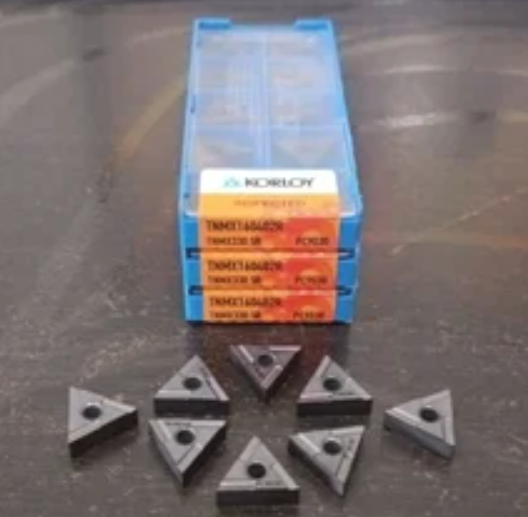
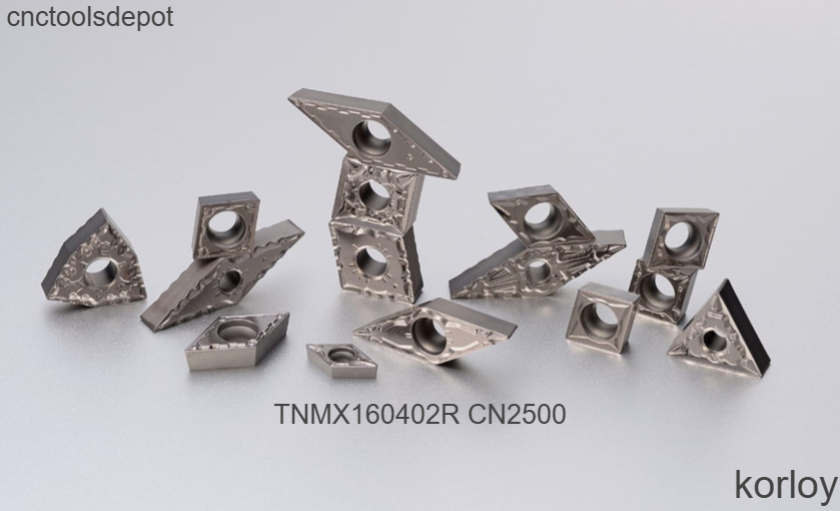
Korloy TNMX160402R CN2000
The Korloy TNMX160402R CN2000 is a triangular, negative‐geometry turning insert (60°) made from Korloy’s CN2000 cermet grade. With 9.525 mm IC, 4.76 mm thickness & 0.2 mm nose radius, it excels in medium-to-rough turning of steel. Delivers superior wear resistance, reduced cratering & consistent surface finish under demanding conditions.
The Korloy TNMX160402R CN2000 insert is designed for machinists who demand more from their cutting tools. Crafted from Korloy’s advanced cermet grade CN2000, this triangular negative insert delivers excellent hardness, strong edge stability, and resistance to cratering and notch wear. Ideal for medium to rough turning operations on steel, it performs well under moderate feeds (≈ 0.10-0.30 mm/rev) and depths of cut (≈ 0.50-3.00 mm). Its 60° included angle geometry ensures good strength at the cutting edge, while a small nose radius (0.2 mm) provides a balance between surface finish and strength. With its robust edge and consistent performance, the TNMX160402R CN2000 helps reduce downtime, repair/rework costs, and maximizes yield. Perfect for automotive, die & mold, heavy general engineering sectors where reliability and tool cost per part are key metrics.
✅ Key Features & Specs:
-
Grade & Coating: CN2000 — a high‐performance cermet grade from Korloy, optimized for excellent wear resistance, cratering resistance & strong edge strength.
-
Geometry / Shape: TNMX triangular insert, negative geometry. 60° included angle.
-
Size / Key dims:
• IC (inscribed circle / “D”): ~ 9.525 mm
• Thickness: ~ 4.76 mm
• Nose radius: 0.2 mm -
Cutting Conditions / Application: Best for medium to rough turning in steels; works well when depth of cut & feed are moderate (ap ~0.50-3.00 mm, fn ~0.10-0.30 mm/rev) in steel materials.
Why It’s a Best Seller
-
Lower tool cost overall: thanks to high wear & cratering resistance, the CN2000 grade lasts longer than many older grades under comparable conditions. Fewer insert changes = less machine downtime.
-
Better surface finish & edge consistency: The geometry & edge quality resist chipping & fracture—even under interrupted cuts or less ideal rigidity. The stable edge helps reduce finish polishing or rework.
Reduced downtime & higher productivity: because of its toughness, the insert allows more aggressive cutting in many situations, without sacrificing edge life or risking breakage. Better chip control under moderate feeds & cuts.
🏭 Application Industries:
This insert shines particularly in:
-
Automotive components (shafts, housings, gears)
-
General engineering / fabrication
-
Die & mold industries (for steel tooling, pre-finishing)
-
Heavy machinery / construction equipment parts
📞 Call-to-Action:
 /
/ 
Related Products
You May Also Like


Frequently Asked Questions
It’s optimized for steel turning — medium carbon, alloy, and tool steels. It may be used in some cast steels if parameters are correct. Less ideal for non-ferrous metals or very hard steels without adjusted cutting conditions
For steel workpieces: feeding in the range of 0.10-0.30 mm/rev, depth of cut around 0.5-3.0 mm, speeds depending on machine/rpm but aggressive enough given CN2000’s wear resistance. Use coolant if possible for improved tool life.
CN2000 has improved cratering resistance, reinforced cutting edge strength, better resistance to chipping or fracture, especially in interrupted cutting. It retains the wear resistance of earlier grades but adds durability under more aggressive conditions.
The nose radius is 0.2 mm. A small radius gives sharper detail and finer finish; however it also reduces corner strength compared to larger radii. This radius is a good compromise for finishing/medium-rough in steel without sacrificing too much edge stability.
TNMX is triangular, negative insert with 60° point angle. Negative geometry gives stronger cutting edge and better ability to handle heavier cuts or interrupted cuts compared to positive geometry. Triangular shape yields 3 cutting edges per insert (if usable by rotating) which helps cost efficiency. Compared to say square or diamond shapes, the 60° triangle provides good strength + chip flow.

India's Largest Marketplace for Carbide Inserts & Cutting Tools.


© 2026. All Rights Reserved
Disclaimer: All Brand Logos belong to their respective owners, CNC Tools Depot is sharing publicly available information