Login / Register

Verify OTP

Update Profile

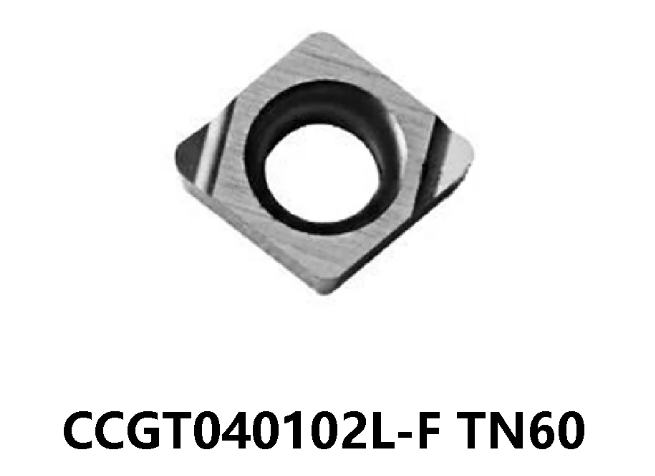
Kyocera CCGT040104R-F TN60
The Kyocera CCGT040104R-F TN60 is a positive-rake, 80° rhombic cermet turning insert with approx. 0.4 mm corner radius and R-chipbreaker, designed for steel & stainless steel finishing. Offers long tool life, crisp surface finish, reduced downtime – ideal for machining shops seeking precision and value.
The Kyocera CCGT040104R-F TN60 insert brings together geometry, grade, and design optimized for precision finishing in turning applications:
-
Geometry & Design: The CCGT format gives an 80° rhombic (diamond) insert with positive rake and R-type chipbreaker (“R-F” variant). Clearance angle ~7° ensures good strength while maintaining sharp edge contact. The "04" in the designation means a corner radius of approx. 0.4 mm – strong enough for light interrupted cuts, yet fine enough for high finish.
-
Grade / Material: TN60 is a high-performance cermet grade from Kyocera known for combining wear resistance and toughness. Especially effective on steel and stainless steel in finishing passes. Minimizes abrasion, resists built up edge, gives stable cutting at high speed.
-
Performance Benefits: You’ll get more parts per insert, fewer tool changes, better surface finishes, reduced scrap and secondary operations. The insert holds up under finishing speeds, reducing downtime and boosting productivity.
-
Recommended Use: Best for turning outer and inner diameters, finishing cuts on steel and stainless steel. Also useful in light interrupted cuts or when you need excellent surface quality. Suitable feed & depth of cut must be chosen per machine capacity.
-
Industries Served: Automotive, die & mold, general engineering, stainless steel fabrication, pressure vessels, aerospace (for non-superalloy steel parts), machine shops focused on quality & cost control.
Hook / Attention Line:
Cut down your machining cost & downtime – get twice the tool life and ultra-fine finishes with the Kyocera CCGT040104R-F TN60 insert!
Key Features & Specs:
-
Geometry: CCGT 04-01-04 R-F → 80° rhombic (diamond) shape, positive rake, 7° clearance, with “R” chipbreaker.
-
Grade & Coating: TN60 cermet grade – engineered by Kyocera for superior wear resistance and toughness; excellent for steel & stainless steel finishing.
-
Corner radius (rε): approx. 0.4 mm (noted as “04”) → gives balance between strength and fine detail.
-
Cutting Applications: Ideal for turning (OD/ID), especially finishing passes on steel and stainless steel. Works well also for light interrupted cuts. Less suited for heavy roughing or very hard materials.
Why It’s a Best Seller:
-
Reduces tool change frequency – TN60’s cermet matrix resists abrasion and holds edge longer.
-
Delivers better surface finish, so less hand-polishing and fewer secondary operations.
-
Higher wear resistance ⇒ more parts per insert, lower cost per component.
-
Less downtime – stable performance at high cutting speeds, especially in finishing.
Application Industries:
Automotive components, general engineering, stainless steel fabrication, pressure vessel manufacture, dies & molds (finish machining), aerospace (non‐superalloy parts), machine tool rebuilders.
Call-to-Action:
Want to see performance in your shop?
Send us a WhatsApp right now to check today’s price & availability! /
/ 
Related Products
You May Also Like


Frequently Asked Questions
Steel and stainless steel in finishing cuts. It's not ideal for extremely hard superalloys or very high interrupted heavy cuts, where tougher grades or inserts are needed.
It’s about 0.4 mm. This radius gives enough edge strength for low to medium feed finishing, while helping produce smooth surface finishes. A smaller radius risks chipping; a larger one may degrade detail in delicate features.
“R” denotes the chipbreaker style; “F” indicates this insert is for finishing. The R-type helps control chip formation, reduces chatter, and helps maintain stable cutting during finish passes.
Cermet grades like TN60 offer better wear resistance (especially in abrasive steels), cleaner surface finishes, and often better performance at finishing speeds vs many standard carbide grades. They are generally more brittle though, so care needed in roughing or interrupted cuts.
-
Start with moderate finishing parameters – use higher cutting speed, light depth of cut (say finishing pass), stable rigid setup. Gradually increase feed if surface finish remains acceptable. Use appropriate coolant or chip evacuation. Monitor wear to find optimal run-time.

India's Largest Marketplace for Carbide Inserts & Cutting Tools.


© 2026. All Rights Reserved
Disclaimer: All Brand Logos belong to their respective owners, CNC Tools Depot is sharing publicly available information